
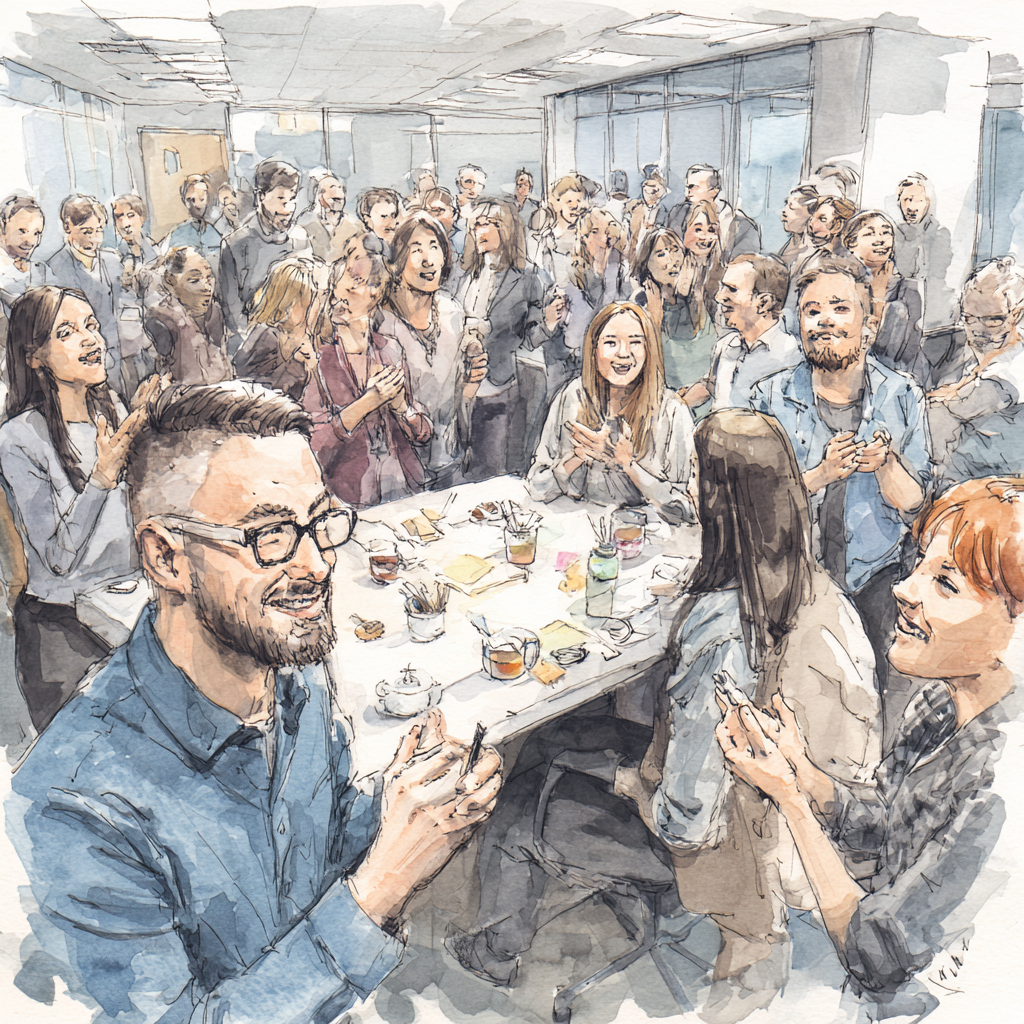
There’s a moment in every major transformation where the organisation collectively exhales. The project team has delivered. The last cutover task is closed. The steering committee gets the green status. Someone writes “success” into the weekly report.
And then… reality arrives.
Not in a dramatic, headline-making way. More often, it’s quiet. A slow drip of issues that don’t fit neatly into a project plan. A rising number of exceptions. Workarounds that feel “temporary” but become permanent. A growing gap between what the solution can do and what the business actually does. The helpdesk volume climbs, but not for the reasons you expected. Operational teams begin to look at the new environment the same way they looked at the old one, something to survive, not leverage.
This is why so many transformations fail after golive. Not because the technology didn’t work. Because the organisation didn’t land the change.
Over the last couple of decades, I’ve watched talented teams deliver complex programs under extraordinary pressure. And I’ve also watched those same programs fail to deliver the promised value six months later. The board doesn’t care that the cutover was “clean.” The CEO doesn’t measure success in deployed features. The CFO doesn’t accept benefits that only exist in a business case. And the CIO, no matter how competent, cannot carry the operational risk alone when the organisation hasn’t truly absorbed the change.
Golive is not the finish line. It’s the start of the only phase that matters: sustained operational performance.
The uncomfortable truth, most transformations peak at golive
The way organisations run projects encourages a dangerous illusion. We treat golive as the climax. Most governance frameworks revolve around delivery milestones, design sign-off, build completion, test exit, go/no-go.
These are important. But they are not the outcomes executives are paying for.
Executives, pay for the result – stability, adoption, uplift in capability, reduced risk, improved service levels, faster time-to-market, better customer experience, lower cost-to-serve, stronger compliance. Those outcomes happen, or don’t happen, after golive.
The hard part begins when the project team disperses, the vendor moves to the next engagement, and the operational organisation is left holding the system, the process, the exceptions, and the customer impact.
And this is where transformations often unravel.
Why transformations fail after golive, the seven predictable causes
When you strip out the noise, post golive failures tend to follow a pattern. Here are the most common reasons I see.
1) Operational readiness is treated as a checklist, not a capability
Many programs “tick off” readiness, training delivered, runbooks written, handover completed. Yet the operational teams aren’t confident. The service model isn’t truly bedded down. The escalation paths are unclear. Key people are learning in production.
Readiness isn’t documentation. It’s demonstrated capability under realistic conditions.
2) Ownership fractures the moment the project ends
During delivery, everyone knows who is accountable, the program leadership. After golive, accountability fragments across operations, architecture, vendors, security, service management, and the business.
When something goes wrong, the question becomes, “Whose problem is this?” That question costs time, money, and trust.
3) Benefits are assumed, not measured
Many organisations declare “benefits tracking,” but in practice they track inputs (training completion, system usage) rather than outcomes (cycle time reduction, error rate reduction, improved customer satisfaction, fewer manual interventions).
If you can’t prove value in operational metrics, you don’t have value. You have a story.
4) Exception handling and workarounds become the real process
The designed process works in the happy path. Real organisations live in the messy path, edge cases, missing data, unusual customers, regulatory constraints, and human habits that won’t vanish because a new system arrived.
If exceptions aren’t actively managed, the business quietly invents shadow processes. Over time, those shadows become the operating model.
5) Change fatigue turns into quiet resistance
People rarely resist change in the way leaders expect. It’s not dramatic refusal. It’s passive drift, the old spreadsheet comes back, the old approval chain returns, the new process is bypassed “just this once.”
If leaders don’t actively reinforce the new ways of working, the organisation defaults to what feels safe.
6) The service experience degrades, and confidence collapses
Even small stability issues can damage executive confidence. If the business experiences repeated incidents, slow resolution, unclear communication, or inconsistent support, the transformation brand is harmed. Future initiatives become harder to fund. The organisation becomes risk-averse.
7) The governance model ends too early
Most governance is designed for delivery. Post golive governance is often a handover to BAU forums that aren’t equipped for transformation-level risk.
The result is predictable: a complex new environment is managed with yesterday’s governance.
What executives should demand instead: outcome assurance
If you’re a CEO, CFO, COO, or board member, here’s the most important shift, stop asking “Did we deliver?” and start asking “Is the change holding?”
If you’re a CIO or IT leader, stop trying to carry this risk personally. No one can “hero” a transformation into long-term success. You need a structured assurance approach that bridges delivery and operations.
This is where AssureChange fits.
AssureChange is not another layer of reporting. It is not project bureaucracy. It is a discipline, a practical, outcome-focused assurance model designed specifically for the dangerous period after golive, when organisations are most exposed and value is most likely to leak.
What AssureChange protects (in plain language)
AssureChange exists to protect three things that matter to executives –
Confidence
Executives need a clear line of sight. Not technical detail, confidence. Is the service stable? Are risks controlled? Is adoption real? Are we trending toward the benefits we promised?
AssureChange creates that line of sight through independent, structured assurance that speaks the language of outcomes, risk, and performance.
Control
Post golive environments can become chaotic, competing priorities, unclear ownership, slow decisions, fragmented accountability.
AssureChange restores control by establishing clarity around ownership, decision rights, escalation paths, and operational governance, while ensuring the organisation doesn’t slip into “normalising deviation.”
Outcomes
Ultimately, value is delivered in operational reality, fewer incidents, better customer experience, faster throughput, stronger compliance, reduced cost, improved resilience.
AssureChange focuses on making the outcomes measurable, trackable, and actively managed, rather than assumed.
How AssureChange works in practice (without the fluff)
AssureChange is most effective when it is designed as a bridge between program delivery and operational performance. In practice, that means a few critical moves –
-
Define what “good” looks like after golive
Not vague statements. Specific operational and business outcomes: service levels, performance targets, adoption indicators, benefits metrics, risk tolerances, compliance requirements.
-
Establish an outcome-based assurance cadence
Short, regular checkpoints that focus on facts: stability, operational readiness in action, incident trends, root causes, adoption patterns, exception volumes, and benefits performance.
-
Create a single accountable view of risk and ownership
Clear accountability for each risk and issue, with decision rights and escalation paths that work at executive speed.
-
Verify readiness through evidence, not paperwork
Runbooks and training matter, but evidence matters more, drills, realistic scenario testing, operational simulations, and proof that teams can execute under pressure.
-
Actively manage adoption and behaviour change
Adoption isn’t a training event. It’s reinforcement, leadership signals, process adherence, and continuous improvement. AssureChange makes this visible and actionable.
-
Keep vendor and third-party commitments honest
Post golive often reveals where contractual assumptions don’t match reality. AssureChange ensures commitments, SLAs, and responsibilities remain aligned to outcomes.
The executive question that changes everything
If you’re leading a transformation, or sponsoring one, ask a single question two weeks after golive –
“If the project team vanished tomorrow, would the organisation still achieve the promised outcomes?”
If the honest answer is “I’m not sure,” you’re not alone. That uncertainty is exactly what causes post golive failure, not malice, not incompetence, just a gap between delivery and sustained performance.
AssureChange exists to close that gap.
Transformations don’t fail loudly, they fail quietly
Most post golive failures won’t make a dashboard go red immediately. They show up as friction, slower operations, higher support cost, inconsistent outcomes, frustrated teams, and executives who lose confidence.
And once confidence is lost, everything gets harder, adoption slows, budgets tighten, and the next transformation becomes politically expensive.
If you’re serious about protecting the outcome, not just delivering the project, then you need an assurance model designed for the phase where outcomes are won or lost.
That is what AssureChange is built to do.
If this resonates, and you’re heading toward (or just past) a golive that matters, the conversation I’d suggest is simple, what outcomes are you protecting, and how will you prove they’re holding in operational reality?
The answer to that question is where transformation success actually begins.
Bushey IT Change – AssureChange Service
AssureChange is Bushey IT Change’s endtoend assurance service designed to protect outcomes, not just deliver projects. It provides independent, structured oversight from commencement of delivery through post golive, ensuring that technology change translates into stable operations, confident adoption, and measurable business value.
AssureChange also bridges the critical gap between programme completion and business-as-usual by validating operational readiness, clarifying ownership and accountability, managing risk across vendors and internal teams, and actively tracking whether benefits are being realised in realworld conditions.
For executives and IT leaders, it delivers confidence and control at the point where most transformations quietly fail, after golive, ensuring that change is absorbed, sustained, and performing as intended across the full lifecycle of delivery and operation.
This Bushey IT Change thought leadership piece explores why AssureChange is Bushey IT Change’s end‑to‑end assurance service that ensures technology initiatives deliver sustained business outcomes, not just a successful go‑live.
It bridges delivery and operations by validating readiness, clarifying accountability, managing risk, and confirming that adoption and benefits are realised in real‑world conditions.
Bushey IT Change provides expert solutions to help enterprises manage complex IT transformations with confidence. Our services cover structured AI services, change management to reduce risk and ensure compliance, comprehensive project management for end-to-end governance and delivery, and seamless Data Centre migration to modern infrastructure with minimal disruption. We focus on designing and executing strategies that align with business objectives, leveraging proven methodologies and deep technical expertise to create secure, efficient, and future-ready IT environments.
Comments are closed